
A screw compressor is a positive displacement compressor type that uses two intermeshing helical rotors (screws) to compress atmospheric air into pressurized air. As the "male" and "female" rotors rotate in mesh, the volume between them continuously decreases, compressing the air. Unlike piston compressors, which rely on reciprocating motion, screw compressors use continuous rotary motion, providing vibration-free, quiet, and uninterrupted airflow. This makes them the primary choice for facilities that operate 24/7.
Oil-Injected and Oil-Free Designs
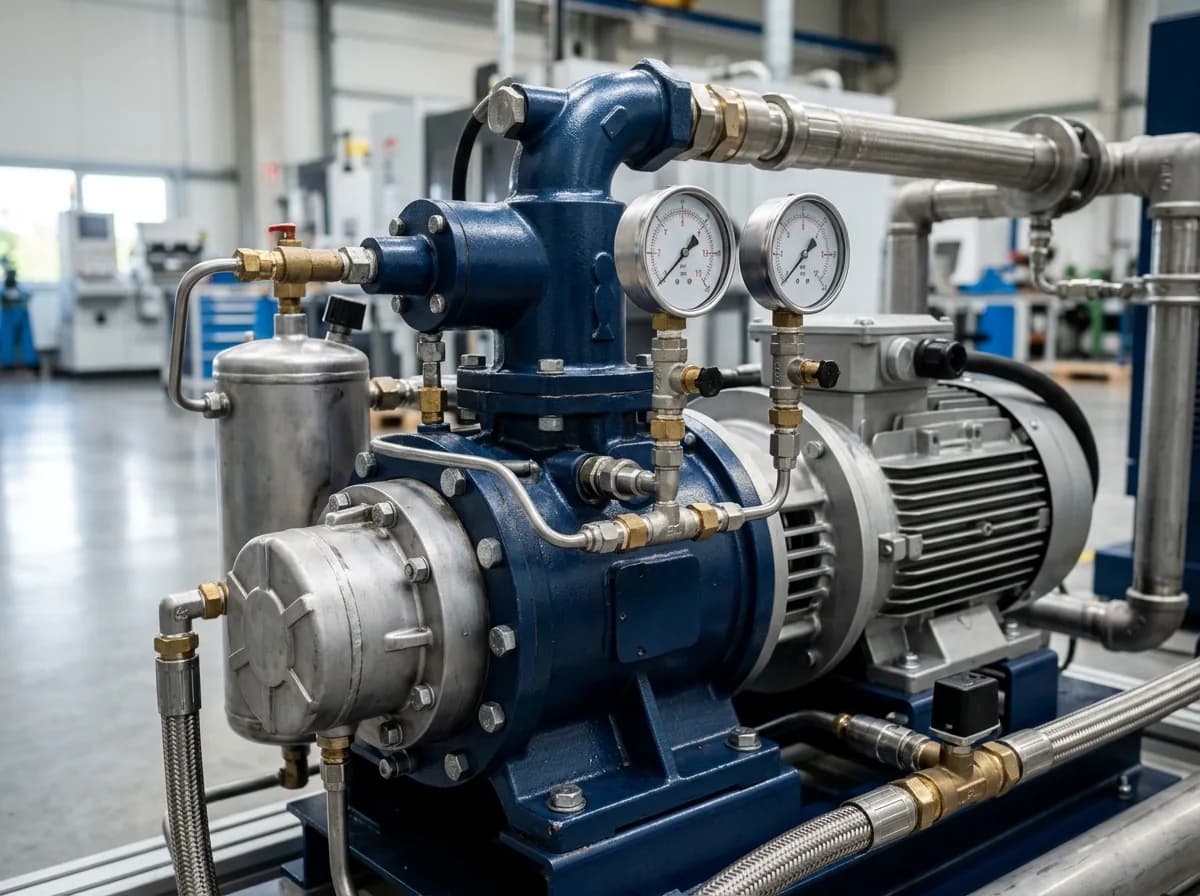
Oil-injected screw compressors are preferred in the vast majority of industrial applications. Oil injected into the compression block simultaneously balances heat, ensures sealing, and protects rotor surfaces. The compressed air-oil mixture is then separated in a separator tank; cleaned air is delivered to the distribution line while oil is filtered and returned to the system. For sectors where air purity is critical — such as food, pharmaceutical, and electronics — oil-free screw compressors are used instead, producing air compliant with ISO 8573-1 Class 0.
In facilities where product contact is critical such as food, pharmaceutical, and chemicals, ISO 8573-1 Class 0 oil-free compressors or point-of-use activated carbon towers should be selected.
Why Screw Compressors?
Screw compressors offer the most efficient solution for facilities requiring high flow rates and continuous operation. When equipped with a variable speed drive (VSD/inverter), they can achieve up to 35% energy savings by consuming energy proportional to demand. Their low vibration levels simplify installation — no special foundation or anti-vibration additions required. They have become standard equipment across many sectors including automotive, textile, packaging, metalworking, and food production.
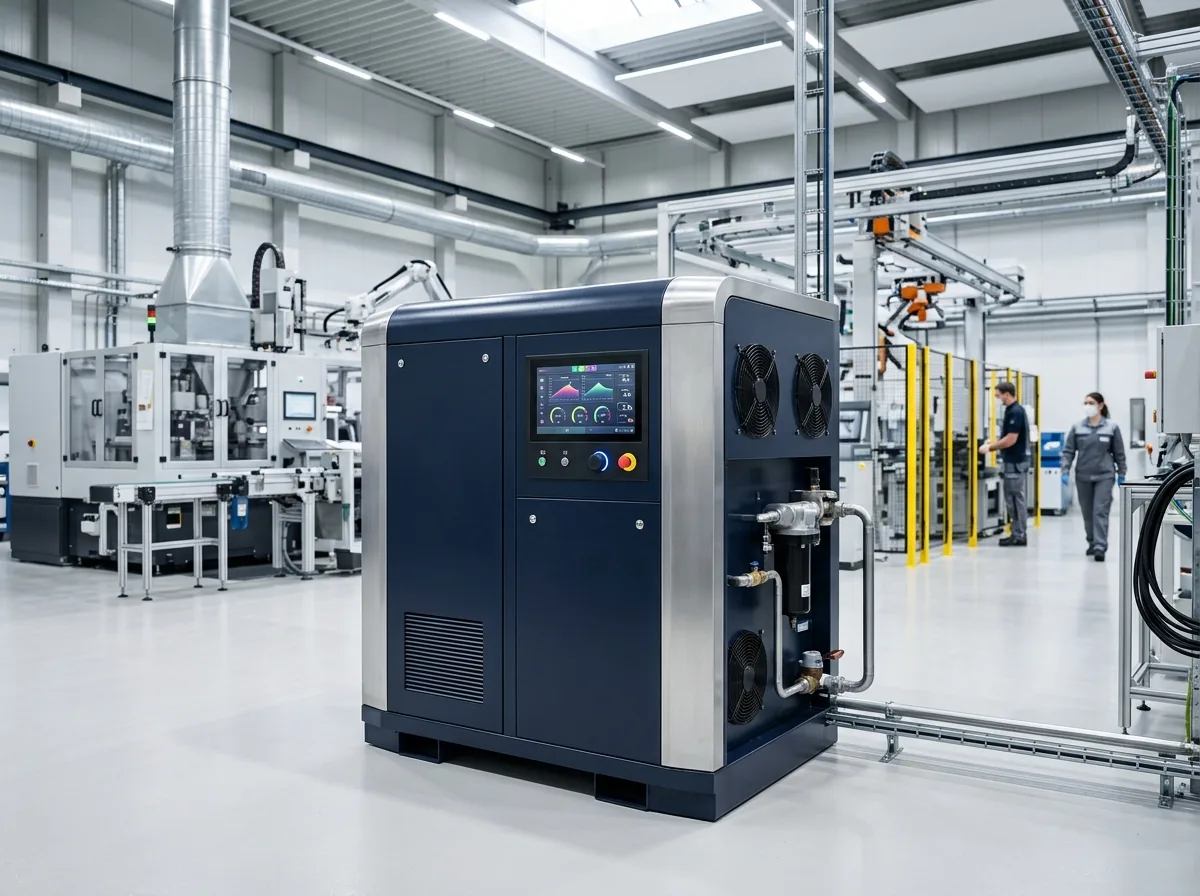
Variable Speed Drive (VSD) System
- Modulates motor speed instantly in direct response to varying air demand
- Eliminates off-load energy waste and high inrush startup current
- Maintains a stable network pressure, preventing unnecessary leak costs
Maintenance Intervals: Distinguish Maintenance from Oil Changes
In screw compressors, "maintenance" and "oil change" are separate tasks performed at different intervals. Maintenance covers intake filter, oil filter, and air-oil separator replacement. For mineral oil systems, maintenance is due every 2,000–4,000 hours, with oil changes every 4,000 hours. With synthetic oil, maintenance is due every 4,000–8,000 hours, with oil changes every 8,000 hours. Exact intervals vary by compressor model and manufacturer specifications; in dusty, humid, or high-temperature environments, intervals should be shortened.
Early Warning Signs
Discharge temperature rising above normal, sudden increase in oil consumption, unusual vibration or noise, and pressure drops are early indicators of maintenance needs. When these signs appear, don't wait for the period to end — an unplanned shutdown costs far more than timely scheduled maintenance.
A discharge temperature exceeding 95°C, rising separator differential pressure (Delta P), or sudden oil level drops indicate impending failure. Stop the unit and perform inspection to prevent airend seizure.
At HAVKOM Engineering, we provide independent technical service and OEM-compatible spare parts for screw compressors from all major brands including CompAir, Parker, and BOGE. We track operating hours digitally and archive every intervention.
Need Technical Support or Spare Parts for Your System?
HAVKOM provides independent technical maintenance, periodic inspection, and OEM-compatible spare parts for compressed air, nitrogen generator, and dryer systems.