
A refrigerated air dryer uses a closed refrigerant circuit to cool compressed air and condense the water vapor inside it, expelling it from the system. The operating principle is similar to standard cooling systems — here the medium being cooled is air, and the goal is to convert moisture into liquid and expel it. Hot, moist air from the compressor is first pre-cooled in an air-to-air heat exchanger, then reduced to approximately +3°C to +7°C in an evaporator fed by refrigerant gas. At this point, water vapor condenses into liquid droplets and is expelled by the separator and condensate drain. The dried, cooled air is then reheated to prevent sweating on the outside of pipes.
Why Is It Necessary?
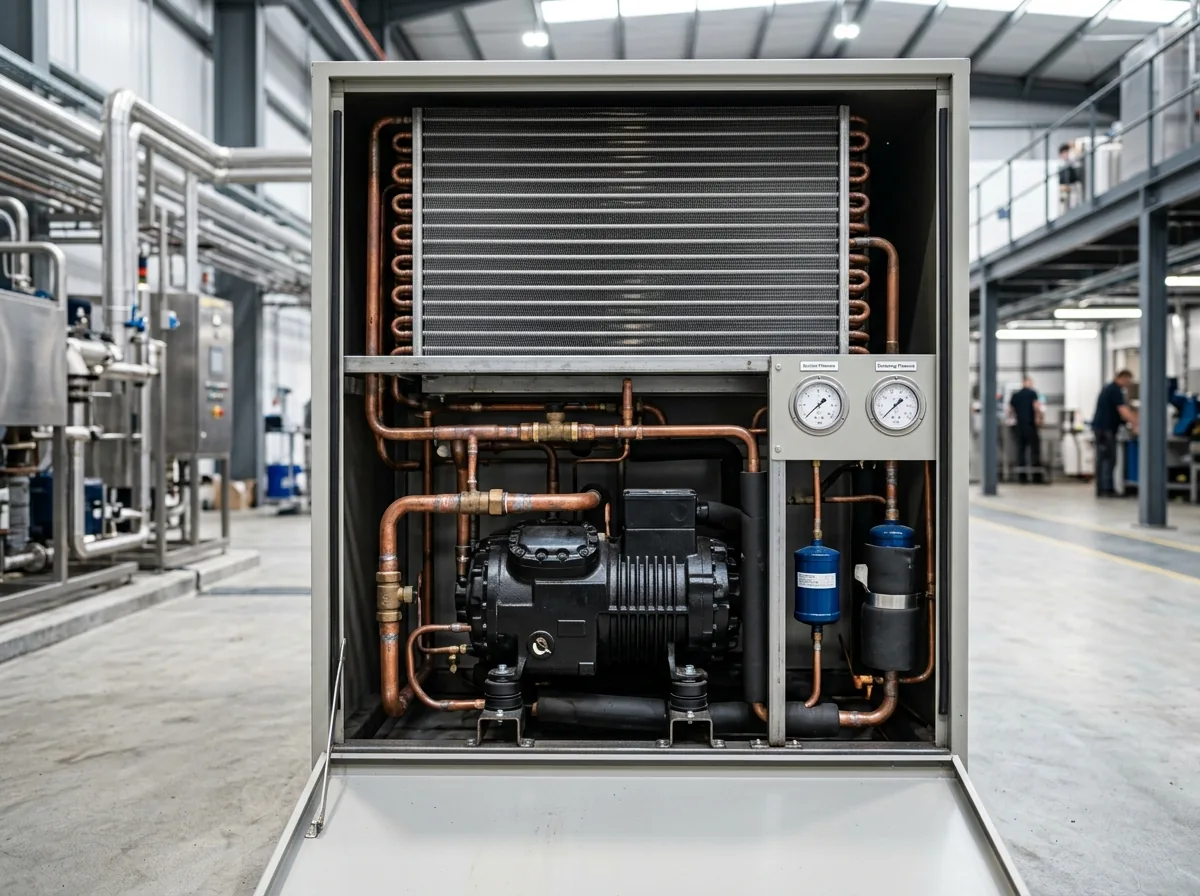
Air exiting a compressor contains large amounts of water vapor; if this moisture is not removed, corrosion and rust form in pipelines, damage and shortened life occur in pneumatic tools, valves and solenoids become blocked, pipe freezing and burst risk arise in cold weather, and product quality drops in painting, packaging, and precision pneumatic control. Refrigeration dryers solve these problems at relatively low capital and operating cost.
Non-Cycling and Cycling Designs
In non-cycling designs, the refrigeration compressor runs continuously, providing a stable, guaranteed pressure dew point (PDP). In cycling designs, the refrigeration system switches on and off proportionally to demand, achieving 30–50% energy savings under partial-load conditions. Cycling designs are recommended for facilities with high energy costs.
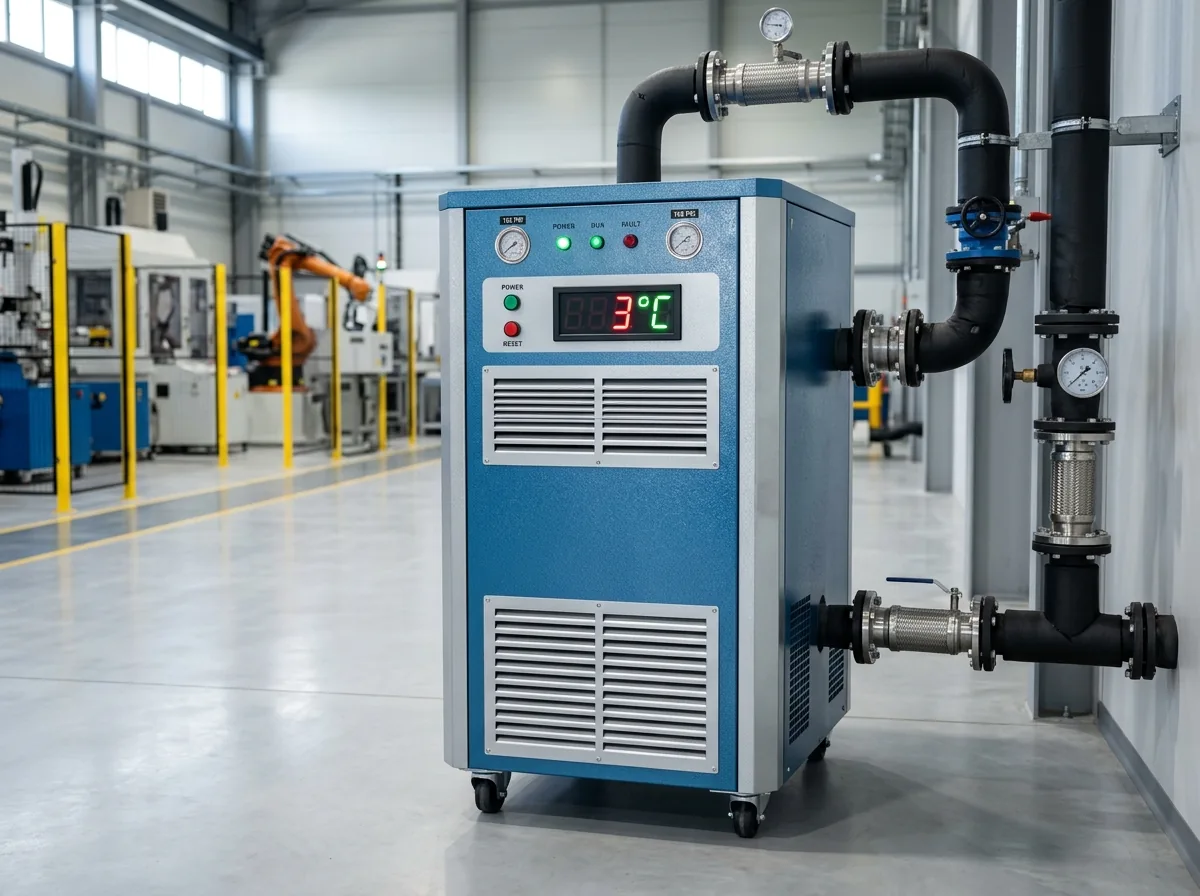
+3°C Dew Point and Moisture Separation
- Stable +3°C pressure dew point preventing network corrosion and pneumatic downtime
- 30% to 50% cooling energy savings under varying load in cycling designs
- Automatic condensate drainage completely eliminating liquid water droplets
Selection Criteria
When selecting a refrigeration dryer, consider: the compressor's maximum flow rate (m³/min), inlet air temperature, ambient temperature, and the dew point required by the system. Standard refrigeration dryers deliver +3°C PDP, sufficient for the vast majority of general industrial applications. For processes requiring much lower dew points or facilities where pipelines are exposed to cold, an adsorption (chemical) dryer should be preferred.
When sizing a refrigeration dryer, the compressor discharge air temperature and compressor room ambient temperature must be accounted for. High ambient temperatures degrade cooling capacity and cause moisture carryover.
Maintenance
Refrigeration dryers require relatively little maintenance. Proper operation of the condensate drain system, refrigerant gas pressure, and heat exchanger surface cleanliness are the key steps in periodic maintenance. A blocked condensate drain system directly reduces dryer efficiency; in some cases it can result in wet air passing through the drain line and damaging the system.
Clogged condensate drain valves or failed float switches force accumulated liquid water directly into the downstream air distribution lines. Drain operation and refrigerant gas pressures must be inspected regularly.
At HAVKOM Engineering, we independently provide all services for refrigeration dryers, including maintenance, condensate drain system replacement, and refrigerant gas servicing.
Need Technical Support or Spare Parts for Your System?
HAVKOM provides independent technical maintenance, periodic inspection, and OEM-compatible spare parts for compressed air, nitrogen generator, and dryer systems.