
An adsorption dryer (commonly known as a chemical or desiccant dryer) adsorbs moisture from compressed air using hygroscopic materials such as silica gel, activated alumina, or molecular sieves, achieving very low dew points. While refrigeration dryers generally achieve a +3°C pressure dew point (PDP), chemical dryers can reach between -40°C and -70°C. This makes them indispensable for pharmaceutical production, food packaging, electronics testing environments, laser cutting, and protecting outdoor pipelines from freeze risk.
Twin-Tower System and Regeneration Cycle
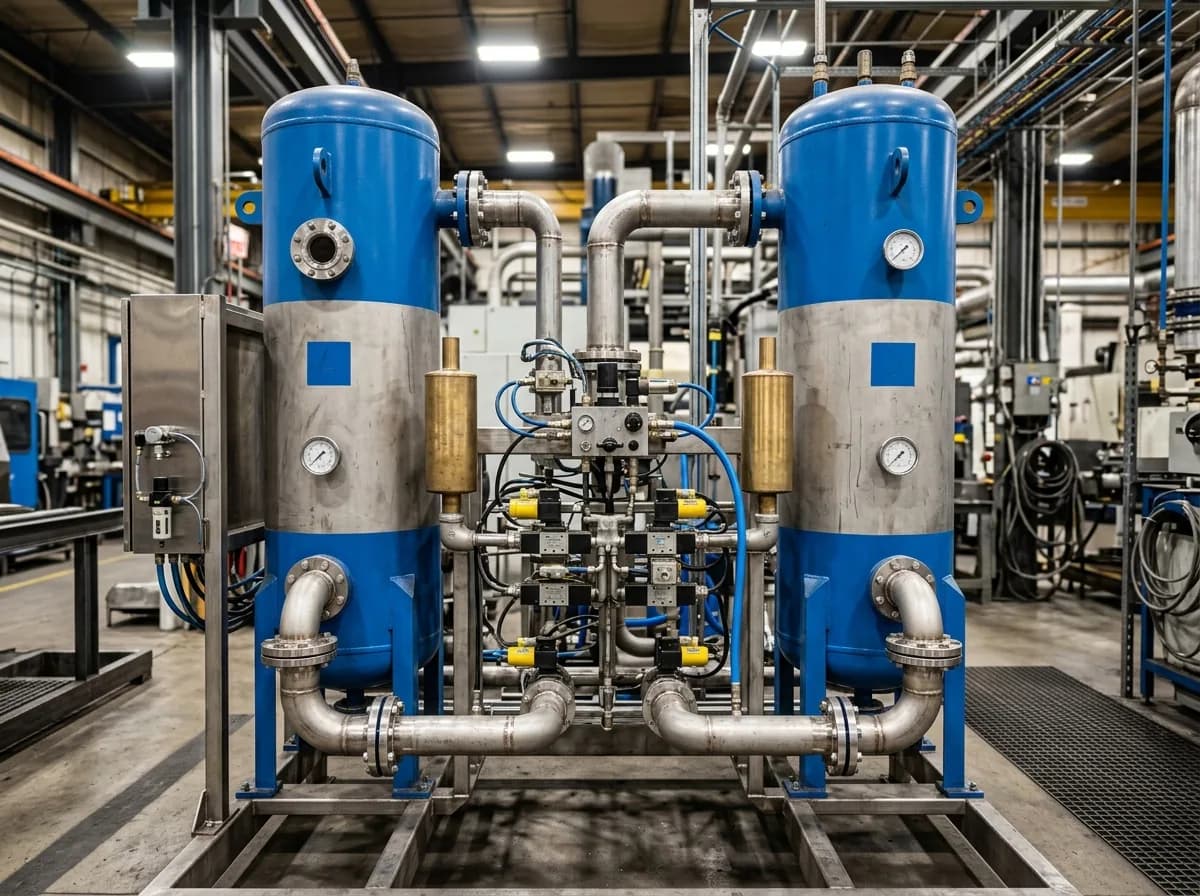
Chemical dryers typically come in a twin-tower design. While one tower is adsorbing moisture, the other is in the regeneration (self-renewal) phase. When a tower reaches moisture saturation, it is automatically taken offline; moisture is removed using heat or pressure reduction, and the tower is readied for use again. This cycle ensures continuous dry air output from the system.
Heatless Design
Uses a portion of the dried compressed air (typically 15–20%) for regeneration. Compact structure and low investment cost are advantages; no heating element required. However, these regeneration losses increase operating costs; suitable for low- to medium-flow applications.
Heated Design
Uses an electric heater or waste heat for regeneration; compressed air consumption is reduced or eliminated entirely. Provides a clear operating cost advantage for high-flow applications. Investment cost and heating element maintenance must be considered.
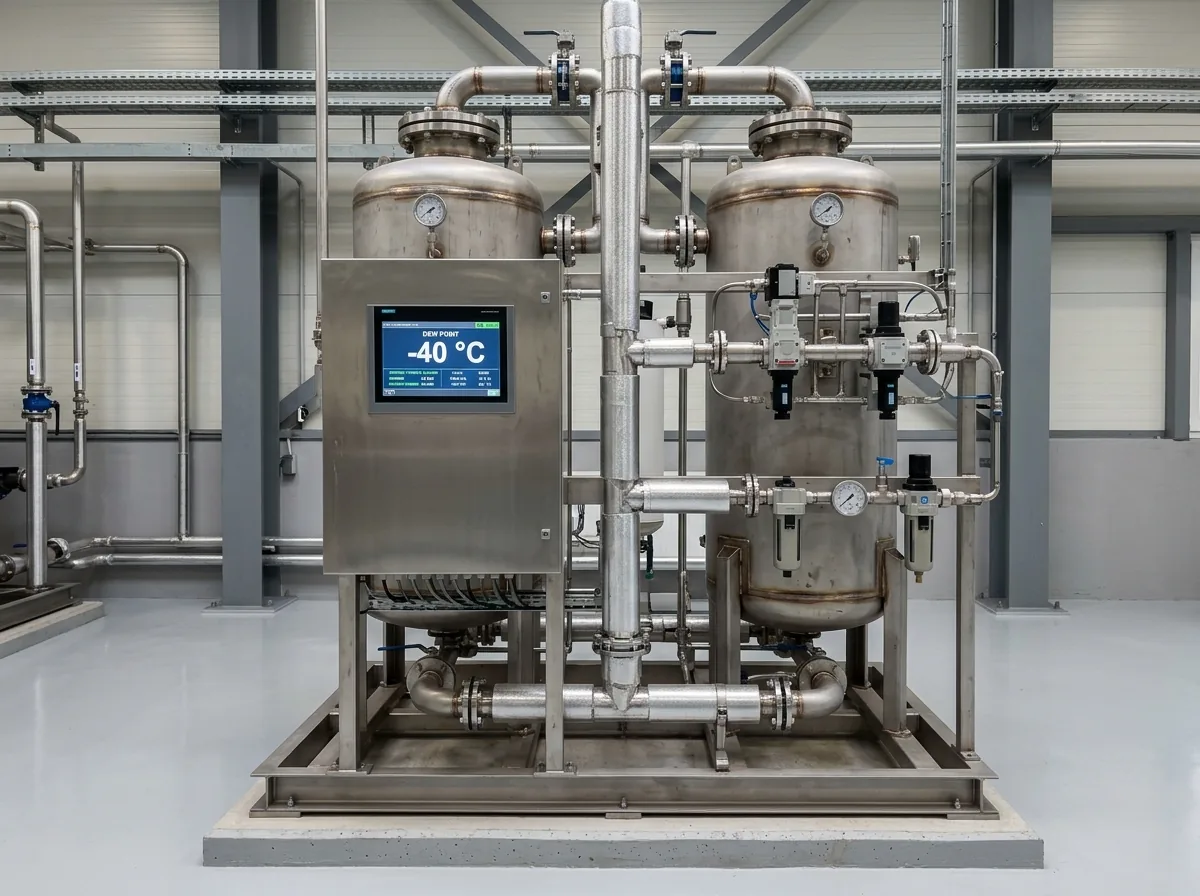
-40°C Dew Point and Desiccant Management
- Ultra-dry compressed air production from -40°C down to -70°C
- Complete elimination of pipe freezing and corrosion risks in outdoor networks
- Digital dew point monitoring to prevent unnecessary regeneration air purge
Adsorbent Material Selection: Silica Gel or Activated Alumina?
Silica gel is the most common choice in general adsorption dryers due to its high moisture retention capacity. Activated alumina is more resistant in high-pressure applications and against chemical impurities. The service life of both materials depends on inlet air quality, operating temperature, and the accuracy of the regeneration cycle.
In facilities where piping runs outdoors or is exposed to sub-zero winter temperatures, the pressure dew point must be maintained at -40°C or lower to prevent condensation and pipeline bursts.
Periodic Maintenance and Early Warnings
The outlet dew point rising above the specified value is the clearest first sign of adsorbent fatigue. Inlet filter cleanliness, valve tightness, and the accuracy of the regeneration cycle timing should also be regularly checked as part of maintenance. Regular dew point measurement allows adsorbent replacement timing to be planned in advance, preventing sudden failures and production downtime.
A rising pressure dew point above the target -40°C indicates that the desiccant bed (activated alumina/silica gel) is saturated or exhaust valves are leaking. Desiccant replacement and valve overhaul must not be delayed.
At HAVKOM Engineering, we apply measurement-based maintenance protocols for adsorption dryers, storing every dew point measurement and intervention in our digital archive.
Need Technical Support or Spare Parts for Your System?
HAVKOM provides independent technical maintenance, periodic inspection, and OEM-compatible spare parts for compressed air, nitrogen generator, and dryer systems.