
An activated carbon tower is a high-efficiency treatment system used in compressed air systems to clean oil vapor, hydrocarbons, and unwanted organic compounds (VOCs) via adsorption. While coalescing filters capture liquid oil and oil aerosols, they cannot retain oil in vapor (gaseous) phase. Activated carbon, with its structure containing millions of pores, traps these vapor-phase contaminants onto its surface. With proper design, total oil concentration in compressed air can be reduced to ISO 8573-1 Class 1 standard (≤ 0.01 mg/m³) — or even ≤ 0.003 mg/m³.
Why Is It Necessary?
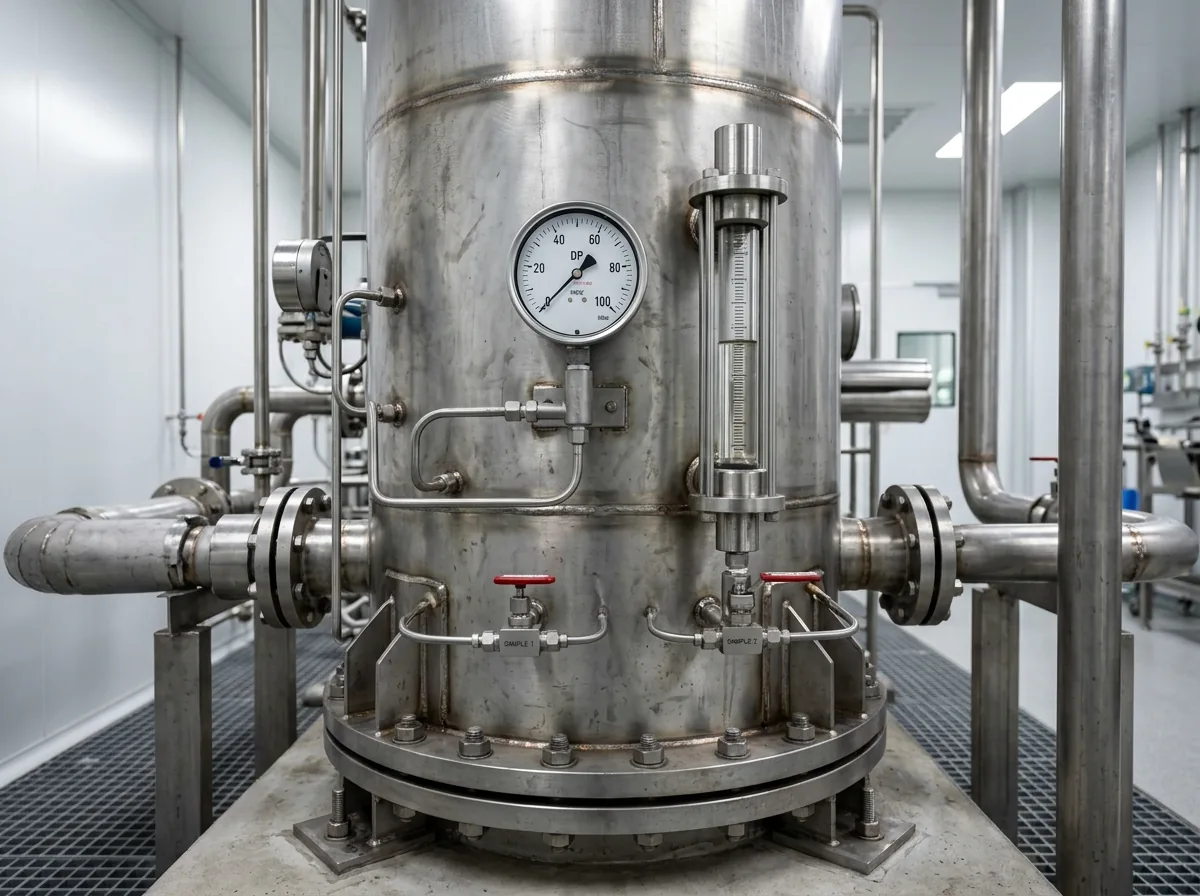
When oil-injected compressors are used or ambient air contains hydrocarbon contamination, oil vapor residue can remain in compressed air even after coalescing filters. This residue causes product contamination and taste/odor issues in food and beverage production, sterility risk and production rejection in pharmaceutical manufacturing, and surface contamination and production defects in the electronics sector. The activated carbon tower captures these final-stage contaminants, bringing air quality to critical standards.
Pre-Filtration Is Mandatory
An activated carbon tower must always be used with appropriate pre-filters. When operated without high-efficiency coalescing filters to capture liquid oil and large droplets, the carbon bed quickly fills with liquid and loses its adsorption capacity. The standard design order should be: pre-filter (coarse particle) → coalescing filter (oil aerosol) → dryer → activated carbon tower → dust filter (to capture carbon fines).
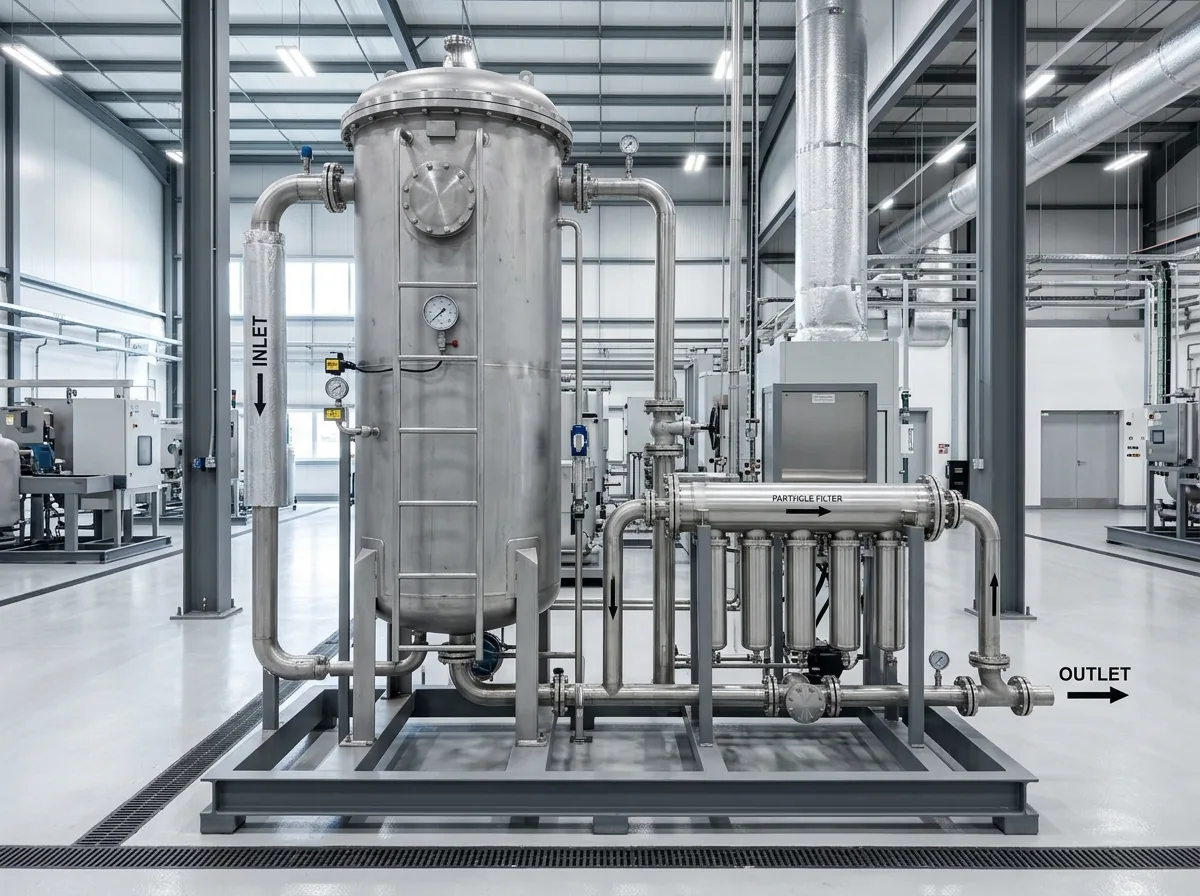
ISO 8573-1 Class 1 Oil Vapor Treatment
- Oil vapor and hydrocarbon adsorption down to ≤ 0.003 mg/m³
- Zero risk of product contamination, taste/odor issues, and batch rejections
- Comprehensive tower protection with upstream coalescing and downstream dust filters
Effect of Temperature on Performance
As inlet air temperature increases, the carbon's adsorption capacity decreases. For this reason, the activated carbon tower should always be placed after a refrigeration or adsorption dryer, at the point where the air is cool and dry.
Activated carbon adsorption capacity decreases significantly at elevated temperatures. The tower must always be positioned downstream of the air dryer where air is coolest and driest.
Maintenance and Replacement Timing
There is no direct indicator showing when the carbon bed is saturated; therefore the carbon bed should be replaced at regular intervals per manufacturer recommendations (typically annually or every 8,000+ hours). Outlet oil concentration measurements can be used to monitor saturation; however, measurements must be made with calibrated instruments for reliable data.
Carbon bed saturation cannot be visually detected from the outside. A saturated bed allows oil vapor to break through into product lines, risking entire batches. Carbon media must be replaced annually (or every 8,000 hours) and verified with calibrated residual oil testing.
At HAVKOM Engineering, we provide independent technical service for activated carbon tower replacement and air quality measurement.
Need Technical Support or Spare Parts for Your System?
HAVKOM provides independent technical maintenance, periodic inspection, and OEM-compatible spare parts for compressed air, nitrogen generator, and dryer systems.