
Industrial plant operators upgrading their air infrastructure frequently confront a critical equipment dilemma: *"Should we install a standard refrigerated air dryer, or invest in a twin-tower desiccant adsorption dryer?"*
Selecting the incorrect drying technology either causes winter pipeline freezing and equipment corrosion or incurs excessive electrical power and purge air regeneration costs.
The Foundational Distinction: Pressure Dew Point (PDP)
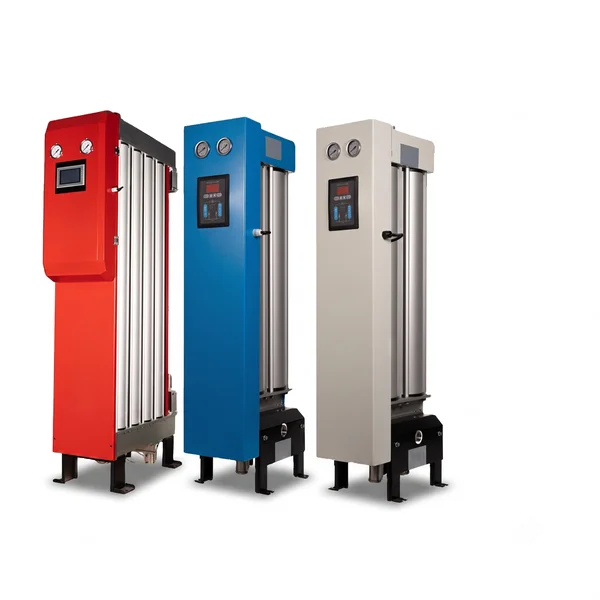
- Refrigerated Air Dryers: Utilize a closed refrigeration circuit to cool compressed air down to +3°C PDP. Moisture condenses into liquid droplets and exhausts via automatic drains. - Desiccant (Adsorption) Dryers: Employ activated alumina or molecular sieve beads to adsorb moisture vapor, delivering deep pressure dew points of -40°C to -70°C.
Engineering Comparison Matrix
Need service or spare parts for this equipment?
HAVKOM Engineering provides brand-independent maintenance and OEM-compatible spare parts.
| Operational Criteria | Refrigerated Air Dryer | Desiccant (Adsorption) Dryer | |---|---|---| | Pressure Dew Point (PDP) | +3°C (ISO 8573-1 Class 4) | -40°C / -70°C (ISO Class 1-2) | | Capital Investment Cost | Economical | Moderate to High | | Purge Air Regeneration Loss | 0% (Zero air consumption) | 15% to 20% in heatless designs | | Routine Maintenance | Low (Drain checks & fin cleaning) | Moderate (Desiccant bed replacement)| | Sub-Zero Freezing Protection | Freezes if ambient drops below 0°C | Immune to freezing down to -40°C|
If factory airlines remain within temperature-controlled buildings feeding standard pneumatic cylinders, a +3°C Refrigerated Dryer is the most cost-effective choice.
When Is a -40°C Desiccant Dryer Strictly Mandatory?
1. Outdoor Distribution Piping: Airlines running between separate factory buildings or across rooftops encounter sub-zero winter temperatures, freezing residual moisture into ice plugs. 2. Upstream of Nitrogen Generators: PSA carbon molecular sieves require feed air at -40°C dew point to prevent premature adsorbent degradation. 3. Fiber Laser Cutting Systems: Laser optics and beam delivery paths demand zero moisture to prevent lens hazing and focal distortion. 4. Pharmaceuticals and Powder Coating: Pneumatic transfer of sugar, flour, or active pharmaceutical ingredients that agglomerate when exposed to trace moisture.
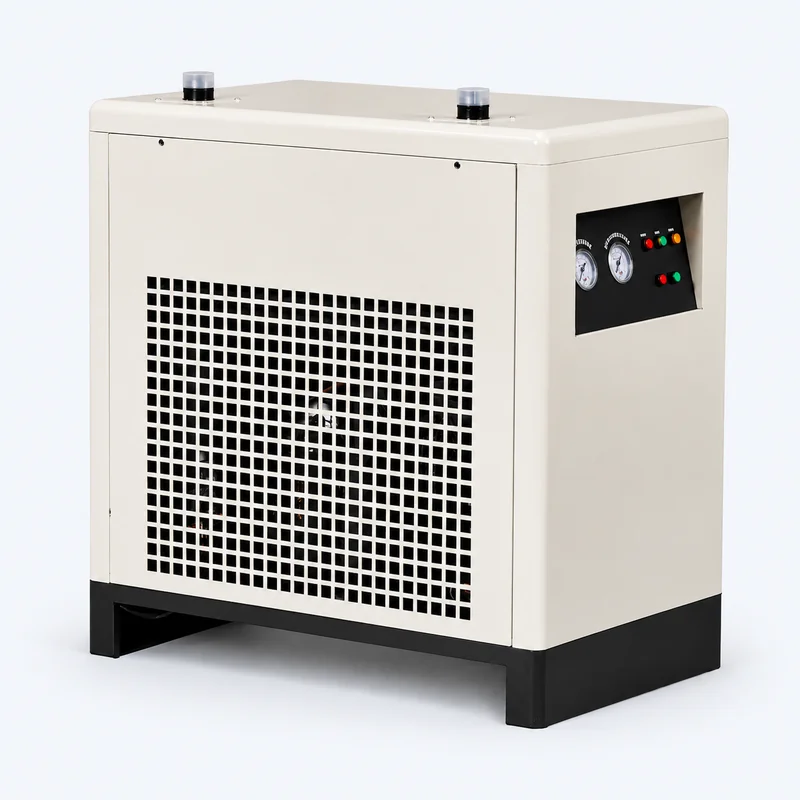
Equipment Selection Matrix
- General indoor manufacturing & assembly: Refrigerated Dryer (+3°C)
- Outdoor piping exposed to winter freezing: Desiccant Dryer (-40°C)
- Laser cutting assist air & PSA nitrogen feed: Desiccant Dryer (-40°C)
When sizing refrigerated dryers, summer ambient temperatures and compressor discharge heat must be corrected for; excessive heat overwhelms cooling circuits.
At HAVKOM Engineering, we audit piping routes and application sensitivities to specify high-efficiency refrigerated dryers and desiccant adsorption dryers. For technical guidance, contact our engineering team.
Need Technical Support or Spare Parts for Your System?
HAVKOM provides independent technical maintenance, periodic inspection, and OEM-compatible spare parts for compressed air, nitrogen generator, and dryer systems.