
A nitrogen generator is a system that produces high-purity nitrogen gas on-site using atmospheric air as feedstock. Nitrogen, which makes up approximately 78% of atmospheric air, is separated from oxygen and other gases using specialized technologies and delivered to the process line. This method eliminates dependence on cylinder or liquid nitrogen supply, removes cylinder exchange logistics and storage costs, and provides a continuous, safe nitrogen source at the facility.
PSA Technology: Continuous Production with Carbon Molecular Sieve
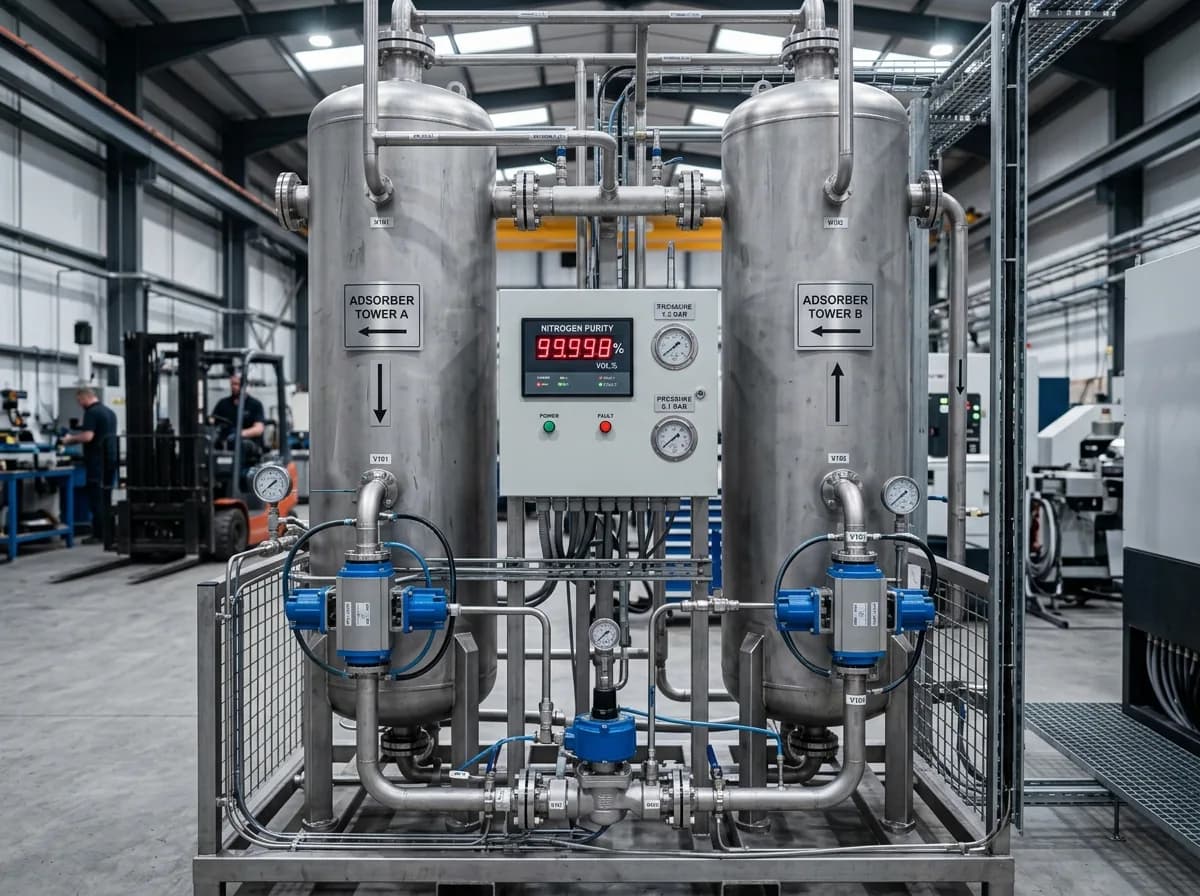
In PSA (Pressure Swing Adsorption) technology, two columns containing Carbon Molecular Sieve (CMS) operate alternately. While the first column is under pressure adsorbing oxygen molecules from atmospheric air, nitrogen-enriched gas is obtained at the outlet. During this time, the second column is in the regeneration phase: pressure is reduced to expel the retained oxygen and the column is readied for use again. Since the columns automatically cycle in sequence, continuous nitrogen production is achieved.
PSA systems can deliver purity between 95% and 99.999%. For food packaging and MAP (modified atmosphere packaging) applications, 99–99.5% is generally sufficient. In electronics, laser cutting, and pharmaceutical production, the 99.9% to 99.999% range is preferred.
In laser cutting, food packaging, and sensitive chemical applications, gas purity should be regularly verified with calibrated analyzers to prevent oxidation and maintain product quality.
Membrane Technology
In membrane nitrogen generators, pressurized air is passed through hollow polymer fiber membranes. Small molecules such as oxygen and water vapor escape through the membrane walls while nitrogen is retained inside and directed to the outlet. These systems are more compact and lower in maintenance cost; however, maximum purity is typically limited to 99.5%. They are sufficient for tire inflation, fire prevention, and basic packaging applications — for critical processes, PSA should be preferred.
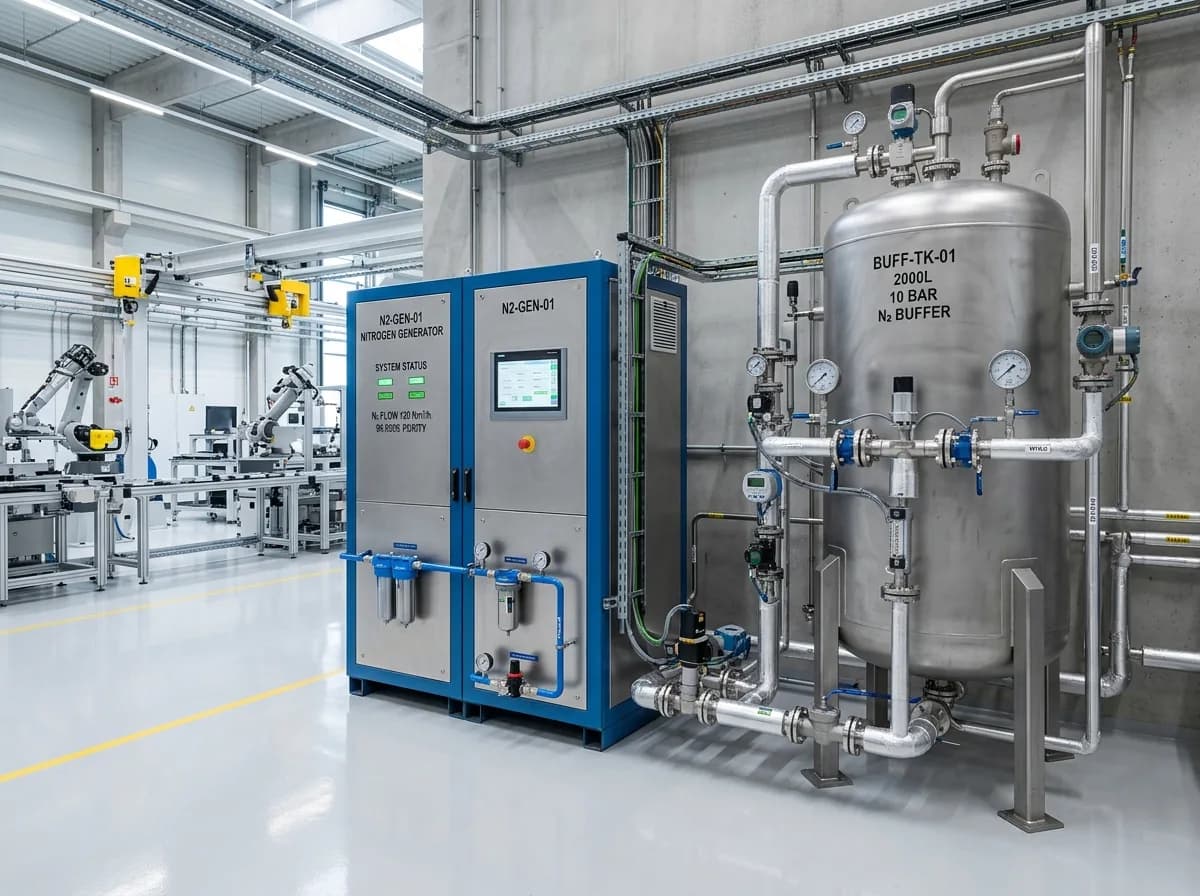
On-Site Nitrogen Generation System
- Tailored gas purity from 95% up to 99.999% based on process needs
- Completely eliminates cylinder rental and liquid nitrogen refill logistics
- Integrated analyzers for real-time monitoring of gas purity and dew point
The Critical Importance of Quality Feed Air
In both technologies, generator performance depends directly on the quality of the feed air. The air from the compressor must be dried, oil-free, and clean of particles. Moisture and oil particles rapidly degrade CMS columns or membrane structures, causing purity levels to drop and shortening equipment life. For this reason, an appropriate dryer and filtration system must always be placed upstream of the nitrogen generator.
Oil vapor or liquid moisture carried over from compressor lines fouls the micro-pores of Carbon Molecular Sieve (CMS), causing irreversible purity loss. Upstream filtration and dryer maintenance must never be neglected.
Periodic Maintenance
Periodic maintenance on nitrogen generators covers inlet filter element replacement, solenoid valve inspection, cycle timing calibration, and regular purity analysis measurements. The performance of CMS columns degrades over time; regular measurement of outlet purity and dew point therefore enables timely intervention planning.
At HAVKOM Engineering, we provide independent technical service and spare parts for PSA and membrane nitrogen generators. We store every maintenance intervention and purity measurement in our digital archive.
Need Technical Support or Spare Parts for Your System?
HAVKOM provides independent technical maintenance, periodic inspection, and OEM-compatible spare parts for compressed air, nitrogen generator, and dryer systems.