
A booster compressor is a second-stage compression system that raises the pressure from an existing compressed air or gas line to much higher levels. Air typically at 7–13 bar from a main screw or piston compressor is taken by the booster and elevated to the values required by the application — 25, 40, 100, or even 300+ bar. Rather than raising the pressure of the entire facility, it provides an economical and safe solution only at the points where high pressure is needed.
Why a Separate Booster?
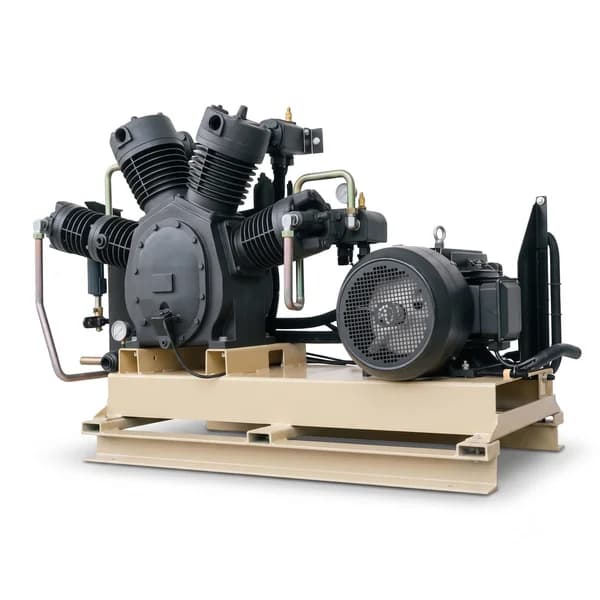
While most equipment in industrial facilities operates between 6–10 bar, some processes require much higher pressure. Bringing the entire system to high pressure both significantly increases energy consumption and multiplies the cost of lines, fittings, and other equipment. Booster compressors offer the most efficient solution to this dilemma: high pressure is achieved only at the required point without touching the existing system pressure. Elevating already-compressed air rather than compressing from atmosphere represents significant energy savings.
Application Areas
PET bottle production: Blow molding requires 25–40 bar air. This level cannot be reached with a standard screw compressor. Due to direct contact between product and air in food and beverage applications, oil-free booster design should be preferred.
Laser cutting: High-pressure nitrogen or air used as nozzle gas directly affects cutting quality and speed.
Pressure testing: Boilers, heat exchangers, pipelines, and pressure vessels are subjected to hydrostatic or pneumatic high-pressure testing.
CNG filling stations, gaz storage, and special pneumatic press applications: Other critical areas where boosters are used across different sectors.
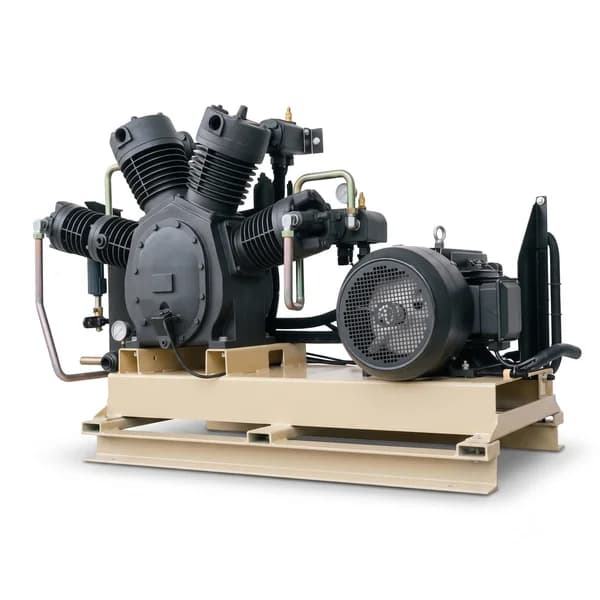
25–40+ Bar Point-of-Use High Pressure
- Elevates pressure up to 40 bar only where needed, avoiding whole-plant high pressure costs
- Uninterrupted flow and pressure stability in PET bottle blow molding and laser cutting
- Multi-stage intercoolers ensuring discharge temperatures remain within safe limits
Cooling System
High compression ratios generate significant heat. Most industrial boosters are equipped with intercooling (between stages) and aftercooling systems. These cooling stages both control discharge temperatures and protect downstream equipment.
In food-contact applications such as PET bottle blow molding, oil-free booster designs or downstream activated carbon filtration should be selected to prevent contamination.
Maintenance
Since boosters are typically of piston design, piston rings, inlet-discharge valves, and the lubrication system are the main focus of periodic maintenance. Due to the high-pressure stages, maintenance timing must be carefully tracked; safety valves and sealing points should be regularly inspected.
In high-pressure compression stages, piston ring wear and valve leakage cause overheating and severe compression loss. Safety relief valves, valve seals, and lubrication levels must be inspected regularly.
At HAVKOM Engineering, we provide independent technical service for booster compressor periodic maintenance and spare parts supply.
Need Technical Support or Spare Parts for Your System?
HAVKOM provides independent technical maintenance, periodic inspection, and OEM-compatible spare parts for compressed air, nitrogen generator, and dryer systems.