
Two distinct separation technologies dominate industrial on-site nitrogen generation: Pressure Swing Adsorption (PSA) and Selective Permeation Hollow-Fiber Membrane systems. For plant decision-makers, selecting the right technology dictates operational reliability, energy efficiency, and total cost of ownership.
Operating Principles: Kinetic Adsorption vs Selective Permeation
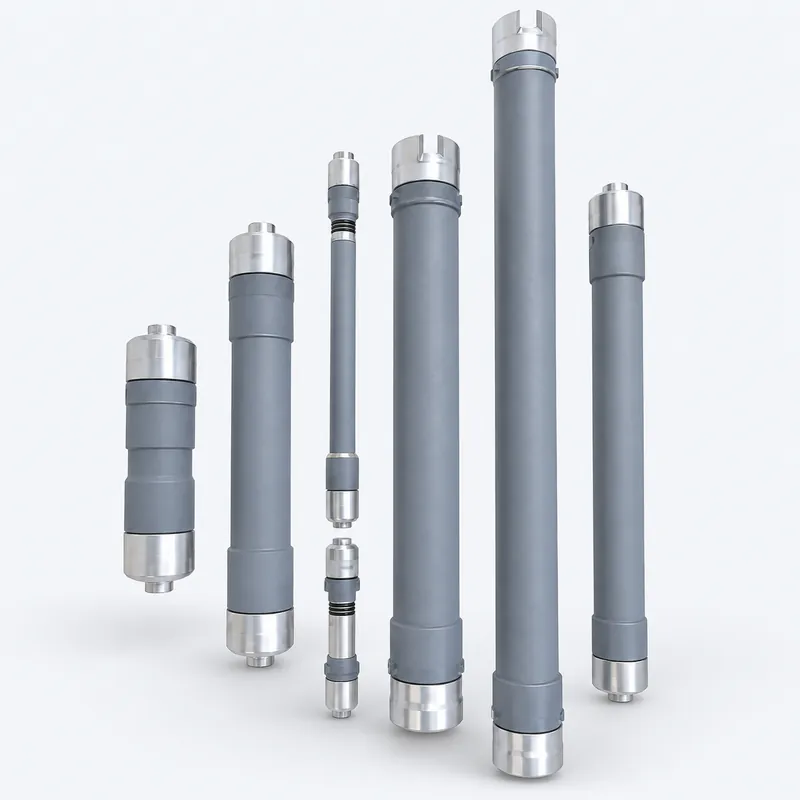
- PSA Technology: Employs twin pressure vessels packed with Carbon Molecular Sieve (CMS). Oxygen molecules adsorb into CMS micropores under pressure, while nitrogen passes through as product gas. Beds cycle alternately through adsorption and atmospheric regeneration. - Membrane Technology: Utilizes bundles of thousands of hollow microscopic polymer fibers. "Fast" gases such as oxygen, water vapor, and carbon dioxide permeate through the fiber walls and vent away, leaving pure nitrogen to discharge continuously through the fiber core.
Comprehensive Engineering Comparison Matrix
Need service or spare parts for this equipment?
HAVKOM Engineering provides brand-independent maintenance and OEM-compatible spare parts.
| Operational Parameter | PSA Nitrogen Generator | Membrane Nitrogen Generator | |---|---|---| | Purity Operating Range | 95.0% to 99.999% (10 ppm O2) | 95.0% to 99.5% (Optimal 95–98%) | | Energy Efficiency (>99% Purity) | Significantly Higher (Lower air factor) | Low (Excessive compressed air feed required) | | Energy Efficiency (95–97% Purity) | Moderate | Outstanding (Highly cost-effective) | | Mechanical Moving Parts | Pneumatic cycle switching valves | Zero (Completely static and valveless) | | Operating Noise Level | ~75 dB(A) (Exhaust blowdown cycle) | <55 dB(A) (Completely silent) | | Footprint and Weight | Larger footprint, heavier towers | Ultra-compact, lightweight tubular design | | ATEX / Hazardous Zone Suitability| Requires electrical controls | Excellent (Can operate fully pneumatically)|
If your required nitrogen purity is 99.5% or higher (such as laser cutting or electronics), PSA is the indisputable energy-saving choice. If your process operates at 95% to 98% purity (such as tire inflation, marine transport, or oil tank blanketing), membrane technology delivers zero-maintenance silent reliability.
Sector-by-Sector Selection Guide
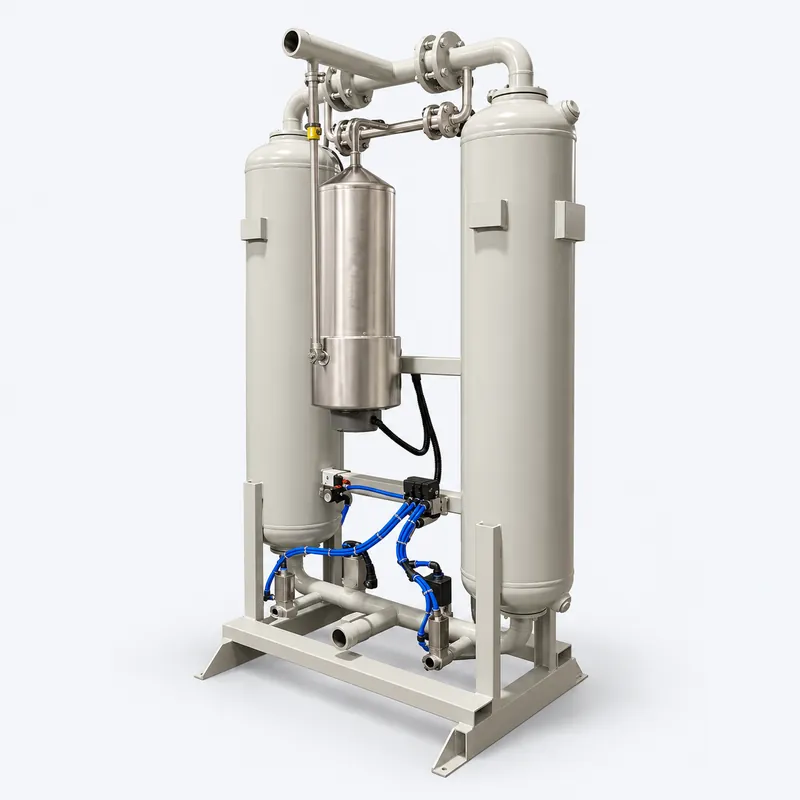
Application Sizing Matrix
- Fiber Laser Cutting (99.999%): Always PSA Technology
- Food MAP Packaging (99.5%): Typically PSA Technology
- Offshore Oil & Gas and Mobile Trailers: Membrane Technology
- Tire Inflation and Cable Sheathing (95–97%): Membrane Technology
Membrane fibers are highly sensitive to compressor lubricant carryover. High-efficiency upstream 0.01 µm coalescing filtration is mandatory to prevent irreversible fiber pore coating.
At HAVKOM Engineering, we supply and commission both modular/twin-tower PSA nitrogen systems and industrial membrane nitrogen generators. For engineering feasibility, contact our technical team.
Need Technical Support or Spare Parts for Your System?
HAVKOM provides independent technical maintenance, periodic inspection, and OEM-compatible spare parts for compressed air, nitrogen generator, and dryer systems.