
When a rotary screw compressor's control panel flashes "High Temperature" or trips on thermal fault (E0110 / Fault Temp), factory operations face an immediate standstill. Industrial screw air compressors are engineered to operate within an optimal thermal window of 80°C to 95°C. When discharge temperature exceeds 100°C, warning indicators sound; reaching 105°C - 110°C triggers an automatic emergency shutdown to prevent catastrophic air-end seizure.
Root Causes of Rotary Screw Compressor Overheating
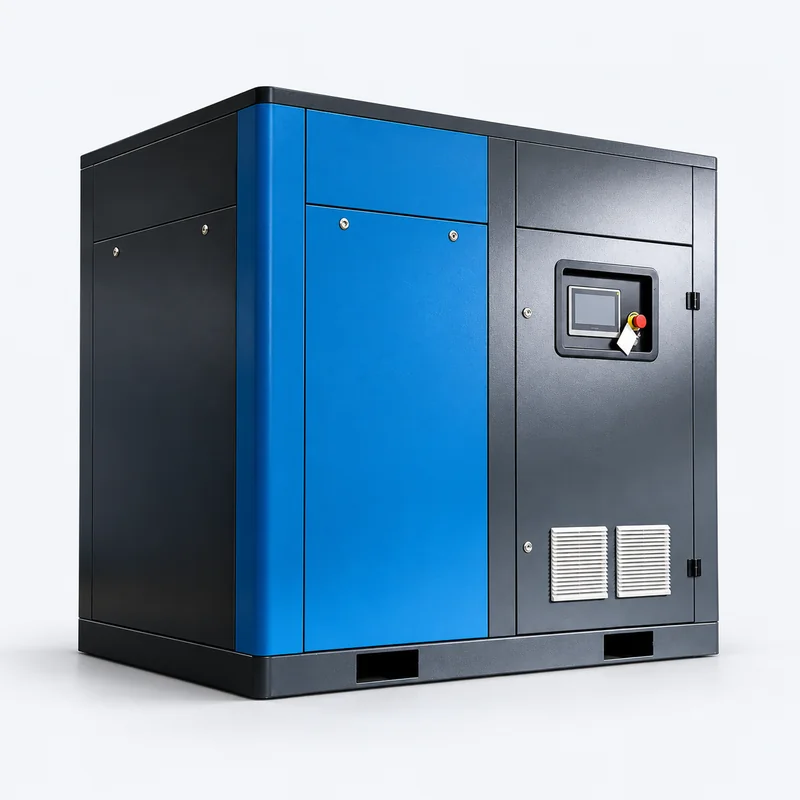
In oil-injected screw compressors, lubricant does far more than reduce friction: it absorbs over 80% of the compression heat and carries it to the radiator. Overheating emergencies virtually always stem from degraded lubricant circulation or compromised heat exchange:
1. Clogged Oil and Aftercooler Radiator Fins: Factory ambient contaminants — dust, fibers, and oil mist — get drawn into the radiator matrix by the cooling fan. Saturated fins prevent airflow, causing oil temperature to climb rapidly. 2. Thermostatic Bypass Valve Seizure: The thermostatic valve directs cold oil around the cooler and diverts hot oil (typically above 71°C or 85°C) through the radiator. When the thermal element sticks in the closed position, uncooled oil recirculates directly into the rotors. 3. Low Oil Level or Degraded Lubricant: Depleted oil volume or varnished, oxidized oil with deteriorated viscosity loses thermal absorption capacity. 4. Saturated Air-Oil Separator Delta P: A clogged separator creates high backpressure, slowing oil return flow and starving the compression chamber under full load.
When a thermal shutdown occurs, carefully feel the cooler's inlet and outlet oil hoses using insulated protective gloves. If one hose is scalding while the other remains lukewarm, the thermostatic valve has failed or internal cooler passages are plugged.
The Decisive Impact of Compressor Room Ventilation
Need service or spare parts for this equipment?
HAVKOM Engineering provides brand-independent maintenance and OEM-compatible spare parts.
A rotary screw compressor rejects approximately 90% of its rated electrical power consumption directly into the compressor room as sensible heat.
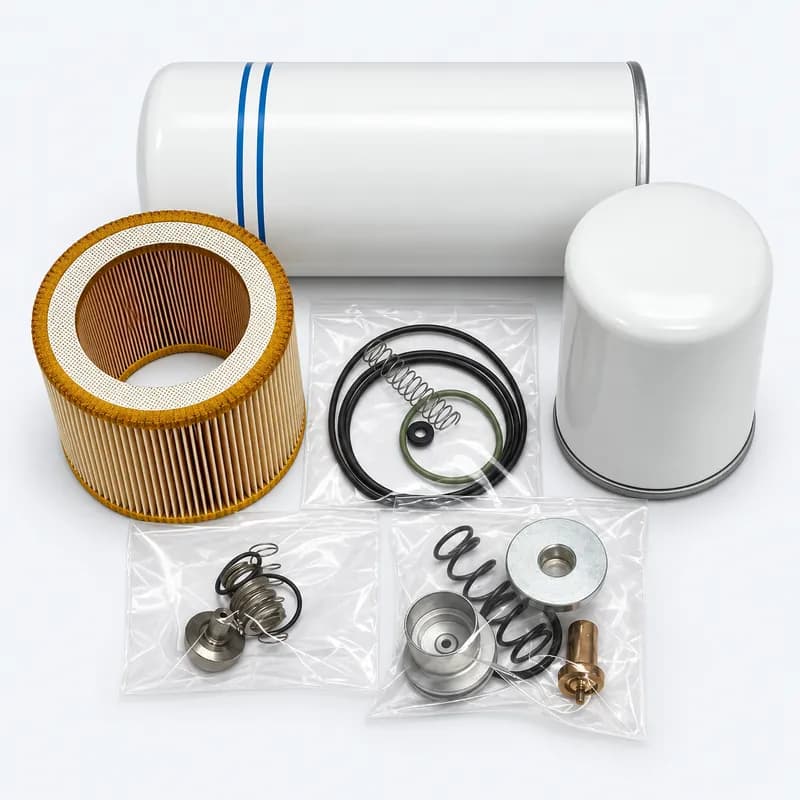
Preventative Thermal Maintenance
- 2,000 / 4,000 / 8,000-hour OEM synthetic lubricant and filter changeouts
- Chemical fin washing to dissolve compacted oily dust layers on radiators
- Thermostatic valve cartridge rebuilding and seal replacement
Without adequate low-level fresh air intake louvers and dedicated high-level hot exhaust ducting, the compressor continually re-ingests its own hot discharge air. Once room ambient temperatures exceed 40°C, thermal tripping is inevitable.
Air-End Rotor Seizure Hazard
Operating at excessive temperatures breaks down the lubricant hydrodynamic film, accelerating micro-wear on precision rotor bearings and tight rotor tolerances.
Compressors running persistently above 105°C must be stopped immediately. Thermal breakdown of the oil film leads to metal-to-metal rotor contact and permanent air-end seizure — the single most expensive catastrophic failure in compressed air equipment.
Step-by-Step Field Resolution for Thermal Shutdowns
- Reverse-blow radiator fins with compressed air; use biodegradable chemical foam if oily residue has crusted between fins. - Check the oil level sight glass while running at full load; confirm the level rests steadily within the operational boundary. - Ensure compressor room ventilation fans are functioning and air intake pathways are unrestricted. - Verify running hours on oil filter and air-oil separator elements; replace immediately if service intervals have expired.
At HAVKOM Engineering, we provide independent technical maintenance and periodic servicing, radiator chemical cleaning, thermostatic valve overhauls, and air-end bearing rebuilding for industrial rotary screw compressors. For urgent breakdown assistance, contact our engineering team.
Need Technical Support or Spare Parts for Your System?
HAVKOM provides independent technical maintenance, periodic inspection, and OEM-compatible spare parts for compressed air, nitrogen generator, and dryer systems.